
FAQs
Product Information

Litter Pearls are made from highly absorbent crystals designed to lock in moisture and control odor while staying dry to the touch.
The crystals absorb liquid and trap odors inside, helping keep the litter box fresh and dry. With daily scooping and light stirring, one bag can last up to a month for one cat.
For best results, fill the litter box with 2 inches of crystals so liquid is absorbed before reaching the bottom.
Yes. The crystals quickly absorb moisture from urine and help reduce odors from both urine and feces.
All Litter Pearls work the same way — the difference is crystal size and shape:
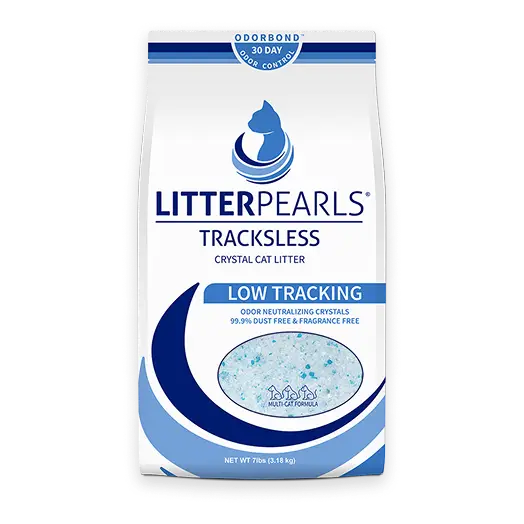
- Trackless Litter Pearls – Irregular shapes to help reduce tracking
- Crystal Clear Litter Pearls – Smooth, rounded pearls
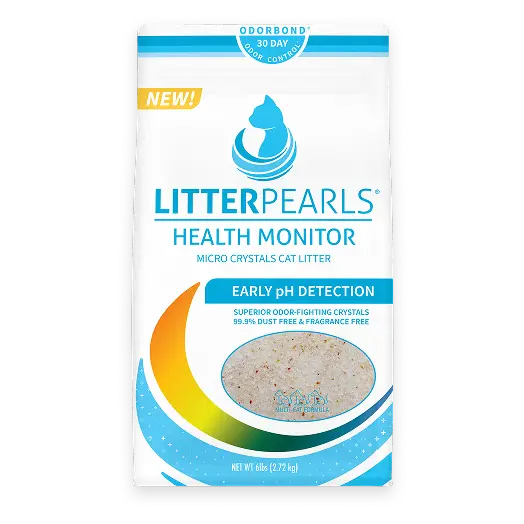
- Micro Crystals – Smaller, sand-like crystals that are gentle on paws
- Ultra Pearls – Rounded crystals commonly found in grocery stores
Choose the option that best fits your cat and your home.
Yes. When switching litters, mixing crystals with your current litter for a short time can help your cat adjust. Long-term mixing with other litter types may reduce performance.
Crystal litter works well for cats of all breeds and sizes. Larger cats or cats that urinate more frequently may need slightly deeper litter or more frequent stirring.
Yes. Most automatic litter boxes work well with crystal litter, especially when rake spacing or settings can be adjusted.
Safety
Crystal litter is recommended for kittens 12 weeks and older. Micro Crystals are a good choice for younger cats because they’re gentle on paws. Always supervise kittens to prevent litter eating.
The crystals are non-toxic. If a small amount is swallowed, encourage your pet to drink water and monitor for changes. Contact your veterinarian if you notice unusual behavior.
Toxoplasmosis is a parasite that may be present in cat feces. Pregnant individuals and people with weakened immune systems should avoid handling used litter. Always wash hands after cleaning the litter box.
Usage & Maintenance
- Fill the box to 2 inches deep
- Scoop solid waste daily
- Stir crystals daily to evenly distribute moisture
- Keep the box in a low-humidity area
With proper care, one bag can last up to a month for one cat.
This usually happens when:
- The litter layer is too shallow
- Your cat digs deeply before urinating
- The same spot is used repeatedly
Adding more crystals and stirring daily typically solves the issue.
Common reasons include:
- Multiple cats using one box
- High humidity
- Increased urination due to health conditions
If performance suddenly changes, consider checking with your veterinarian.
Used litter should be placed in household trash. Disposal guidelines vary by location, so check local recommendations.
We do not recommend flushing litter. Small amounts that cling to waste may break down in water, but trash disposal is best.
Health Monitoring Crystals – FAQs & Directions for Use
No. Litter Pearls Health Monitoring helps indicate changes in urine pH that may be worth noticing. It is not a medical or diagnostic product and does not treat, cure, prevent, or diagnose disease. Only a licensed veterinarian can diagnose medical conditions.
Color changes should be discussed with your veterinarian, and regular veterinary checkups remain an important part of your cat’s overall health.
The crystals are formulated to change color based on urine pH levels.
- Normal cat urine is typically slightly acidic to neutral (about pH 6.0–7.0)
- pH can fluctuate due to stress, hydration, diet, or routine changes
- Persistent or unusual changes may warrant a veterinary visit
Not necessarily. A color change means your cat’s urine pH is outside the typical range. This can be influenced by both medical and non-medical factors.
If abnormal colors persist for more than 24–48 hours, or if your cat shows signs of discomfort or behavior changes, contact your veterinarian.
- Light Olive Green – Normal
Urine pH is within the typical range. Continue monitoring. - Orange to Deep Yellow – Abnormal (Acidic)
May be associated with kidney stress or increased risk of bladder stones. - Green to Blue – Abnormal (Alkaline)
May be associated with urinary tract infections or increased risk of bladder stones. - Red to Rust – Possible blood in urine
If red or rust colors appear, contact your veterinarian immediately, especially if your cat strains or stops urinating.
Occasional changes can happen. Monitor closely and ensure your cat is eating, drinking, and acting normally. It is always best to consult your vet.
Yes. Monitoring over time can help you notice changes before obvious signs of discomfort appear. The litter also provides excellent odor control, low dust, and a soft feel for paws. This litter is not to be used as a diagnostic tool, contact your vet with any abnormal findings.
- Start with a clean litter box. Wash with warm water and mild soap, rinse well, and dry completely.
- Avoid harsh cleaners like bleach or ammonia, which can affect color accuracy.
- Fill the box with 2–3 inches of Health Monitoring crystals.
- Check the urine spot 15–60 minutes after use and compare it to the color guide on your package.
- If unusual colors persist for 24–48 hours, consult your veterinarian.
For one cat, replace the litter about every 30 days. Always follow the directions on your package
No. It is a non-clumping crystal litter. Scoop solid waste daily and stir crystals to maintain odor control and accurate monitoring.
Help & Troubleshooting
Introduce crystal litter gradually by mixing it with your current litter. Slowly transition over a few weeks to help your cat adjust to the new texture and sound.
Possible reasons include:
- A dirty litter box
- Stress or household changes
- Territorial issues in multi-cat homes
- Medical concerns
If the behavior continues, a veterinary visit is strongly recommended.